


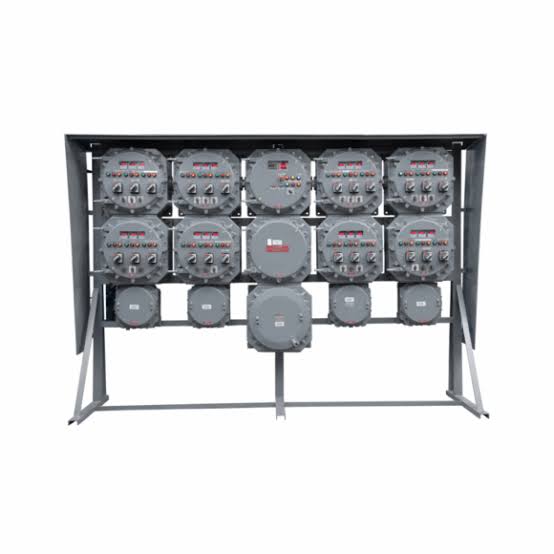
 flame proof electrical panel
A flame proof electrical panel is an electrical enclosure that is able to withstand an internal explosion and prevent it from propagating into the surrounding potentially explosive environment. Flame proof electrical panels are used in explosive environments such as oil and gas, petrochemical, or chemical production, and other high-hazard industries.
Unlike a standard electrical panel, a flameproof panel is designed around a specific explosion-protection principle known as Ex d or flameproof enclosure protection. IEC 60079-1 specifies requirements for equipment using flameproof enclosures in explosive gas atmospheres.
What Is a Flame Proof Electrical Panel?
A flame proof electrical panel houses electrical components that could potentially produce sparks, arcs, or high temperatures inside a specially engineered enclosure.
The purpose is not necessarily to prevent a flammable atmosphere from entering the enclosure. Instead, the enclosure is designed to withstand an internal explosion and prevent that explosion from spreading to the surrounding atmosphere.
This distinction is important. Flameproof protection works by containing an ignition event inside the enclosure and controlling the way hot gases and flames can escape. The enclosure must be mechanically strong enough to withstand the pressure generated by an internal explosion while preventing flame transmission to the hazardous area outside.
How Does a Flame Proof Electrical Panel Work?
The working principle of a Flame Proof Electrical Panel can be understood in a few steps:
1. Electrical components are enclosed
Components such as circuit breakers, contactors, relays, terminals, switches, control equipment, and other electrical devices are installed inside a specially designed enclosure.
Some of these components can generate an ignition source during normal operation or under fault conditions.
2. An explosive mixture may enter the enclosure
Flameproof protection does not rely solely on keeping flammable gas outside the enclosure. If an explosive gas-air mixture enters the enclosure and encounters an ignition source, an internal explosion can occur.
The enclosure is designed with this possibility in mind.
3. The enclosure contains the explosion
The enclosure is constructed to withstand the pressure generated by the internal explosion without allowing the explosion to rupture the enclosure and ignite the surrounding atmosphere.
This is the fundamental principle of Ex d protection.
4. Flamepaths control escaping gases
The joints between parts of the enclosure are engineered as flamepaths. These may occur at covers, flanges, threaded joints, or other mating surfaces.
If hot gases move through these controlled gaps following an internal explosion, the flamepath helps cool the gases before they reach the outside atmosphere. Its dimensions are carefully controlled according to the applicable requirements, enclosure characteristics, and gas group.
The flamepath is therefore a critical part of the protection system—not simply a mechanical joint.
5. External ignition is prevented
When properly designed, certified, installed, and maintained, the flameproof enclosure prevents the internal ignition event from igniting the surrounding explosive atmosphere.
This makes the technology particularly relevant to hazardous-area electrical installations.
What Is a Flamepath?
A flamepath is a precisely engineered joint or passage between parts of a flameproof enclosure through which gases could potentially travel following an internal explosion.
For example, a flamepath may be created where an enclosure cover meets its body. The gap and length of this path are controlled so that an escaping flame is extinguished or sufficiently cooled before reaching the external atmosphere.
IEC 60079-1 establishes requirements for flameproof enclosures, including characteristics associated with flamepaths.
Because flamepaths are essential to Ex d protection, improper modifications, damaged mating surfaces, corrosion, incorrect fasteners, or unsuitable maintenance practices can compromise the protection concept.
What Are the Main Features of a Flame Proof Electrical Panel?
A flame proof electrical panel generally incorporates several features intended for hazardous-area applications:
- Robust enclosure construction: The enclosure must withstand the pressure associated with an internal explosion.
- Engineered flamepaths: Mating surfaces are designed according to applicable Ex d requirements.
- Suitable cable entries: Cable glands and other entries must be appropriate for the enclosure and installation.
- Temperature control: The equipment must be suitable for the required temperature classification.
- Earthing and bonding: Appropriate electrical and protective earthing arrangements are essential.
- Certified components: Components and assemblies must be selected according to the required hazardous-area protection concept.
- Appropriate environmental protection: Depending on the application, additional protection against dust, moisture, corrosion, or other environmental conditions may be required.
The exact construction and certification requirements depend on the equipment design and hazardous-area classification.
Where Are Flame Proof Electrical Panels Used?
Flame Proof Electrical Panel systems are commonly considered for locations where explosive atmospheres may occur.
Typical applications include:
- Oil and gas production facilities
- Refineries
- Petrochemical plants
- Chemical processing facilities
- Gas processing plants
- Storage and loading terminals
- Offshore platforms
- Paint and solvent processing areas
- Pharmaceutical manufacturing areas
- Other classified hazardous locations
Oil and gas environments can contain flammable gases and vapours, making appropriate hazardous-area equipment selection particularly important. Ex equipment must be matched to the conditions and classification of the installation rather than selected solely because it carries a general “flameproof” description.
Flameproof vs. Standard Electrical Panels
A standard electrical panel is generally designed for ordinary industrial or commercial environments. It may not be constructed or certified to contain an internal explosion or prevent flame transmission into a hazardous atmosphere.
A Flame Proof Electrical Panel, on the other hand, uses a certified protection concept specifically intended for explosive atmospheres.
The difference is therefore not simply the thickness or strength of the enclosure. It involves the complete protection design, including enclosure construction, flamepaths, cable entries, temperature limitations, certification, installation, and maintenance.
For hazardous-area projects, selecting equipment according to the required Ex protection method and applicable standards is essential.
Why Are Flameproof Cable Glands Important?
The enclosure is only one part of a hazardous-area electrical installation. Cable entries also need appropriate protection.
A cable gland provides the connection between the electrical cable and the enclosure while maintaining the required protection characteristics. For Ex d installations, the gland selection needs to be compatible with the enclosure, cable construction, certification requirements, and installation conditions.
This is particularly relevant for oil and gas projects, where cable systems can pass through multiple hazardous-area zones.
Companies such as CGEX India work with hazardous-area products and solutions relevant to applications such as ATEX flameproof glands and Saudi oil and gas installations. Selecting the correct certified cable entry system should always be based on the equipment certificate and the requirements of the actual installation.
What Standards Apply to Flame Proof Electrical Panels?
IEC 60079 is one of the key international standards series covering equipment and installations for explosive atmospheres.
IEC 60079-0 provides general requirements for Ex equipment, including construction, testing, and marking. IEC 60079-1 specifically addresses equipment protection by flameproof enclosures “d.”
The relevant certification framework can also depend on the country, project specifications, hazardous-area classification, and regulatory requirements.
For this reason, a panel should not be selected based only on the words “flameproof” or “explosion-proof.” The complete equipment marking, certificate, gas group, temperature class, protection level, and installation requirements should be checked.
How Do You Choose the Right Flame Proof Electrical Panel?
Before selecting a flame proof electrical panel, consider:
- Hazardous-area classification: Identify the applicable zone or division.
- Gas or dust group: Determine the substances that may be present.
- Temperature class: Confirm that the equipment’s maximum surface temperature is appropriate for the hazardous atmosphere.
- Required protection concept: Confirm whether Ex d or another protection method is required.
- Electrical specifications: Check voltage, current, power, short-circuit requirements, and the components being installed.
- Cable entry requirements: Select compatible and certified cable glands and accessories.
- Environmental conditions: Consider temperature, moisture, corrosion, dust, and outdoor exposure.
- Certification: Verify that the equipment certification matches the intended installation.
Proper engineering and installation matter just as much as the enclosure itself. A certified product can lose its intended protection if it is incorrectly modified, installed, or maintained.
Why Flameproof Panels Matter in Hazardous Areas
Electrical equipment can become an ignition source when sparks, arcs, or hot surfaces come into contact with an explosive atmosphere. Flameproof enclosure technology addresses this risk by containing a potential internal explosion and controlling flame transmission.
For industries handling flammable gases and vapours, this approach can form an important part of the overall hazardous-area protection strategy.
Need Flameproof Components for Hazardous-Area Applications?
If your project involves hazardous-area electrical equipment, cable glands, or oil and gas applications, choosing components with the appropriate certification and protection concept is essential.
FCG Flameproof Control Gears (India) Pvt. Ltd can help you explore flameproof and ATEX-related solutions for demanding industrial applications. Contact the team to discuss your project requirements and identify suitable hazardous-area products.
Frequently Asked Questions
1. What is a Flame Proof Electrical Panel?
A Flame Proof Electrical Panel is an enclosure designed to contain an internal explosion and prevent flames or hot gases from igniting the surrounding explosive atmosphere. It uses the Ex d flameproof protection principle and is intended for suitable hazardous-area applications.
2. How does a flameproof electrical panel work?
A flameproof panel contains an internal explosion within a strong enclosure. Precisely engineered flamepaths control the escape of hot gases and help prevent flame transmission to the surrounding atmosphere.
3. Where are flameproof electrical panels used?
They are used in hazardous areas where flammable gases, vapours, or other explosive atmospheres may occur. Common applications include oil and gas, refineries, petrochemical facilities, chemical plants, and other process industries.
4. What is Ex d protection?
Ex d is the designation commonly used for protection by flameproof enclosure. Under IEC 60079-1, the enclosure is designed to withstand an internal explosion and prevent the explosion from propagating to the surrounding explosive atmosphere.
5. Are flameproof panels the same as explosion-proof panels?
The terms are often used interchangeably in industrial discussions, but equipment selection should be based on the specific protection method, certification, hazardous-area classification, and applicable standards. Ex d specifically refers to the flameproof enclosure protection concept under the IEC 60079 framework.