


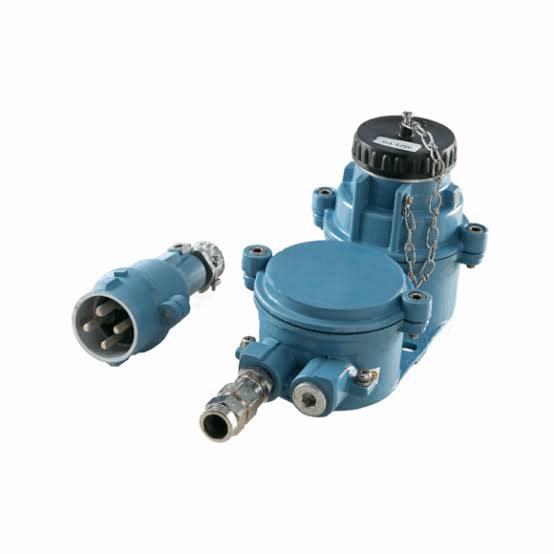
 explosion proof socket
An explosion proof socket is basically a power outlet. It is built inside a certified Ex enclosure and lets you connect tools, pumps or lighting without igniting nearby gas or dust. Most Zone 1 sockets use Ex d flameproof construction and a matching plug. This guide is written for Delhi-NCR industry.
Portable tools, pumps and test equipment all need power. In a hazardous area, pushing in an ordinary plug can strike an arc. That arc can ignite a flammable atmosphere. An explosion proof socket contains the risk.
How Does an Explosion Proof Socket Work?
The contacts sit inside a flameproof chamber. If an arc ignites gas inside, the enclosure contains the blast. Machined joints cool escaping gases before they reach the outside air.
Many certified designs add a mechanical interlock. It stops a live plug from being pulled out. The result is a safe connection, every time.
Switch Socket, Plug and Socket, Socket Panel: What Is the Difference?
- Switch socket: a socket outlet paired with a switch in one enclosure
- Plug and socket: a matched pair for portable connections
- Socket panel: several outlets housed together, often with protection devices
FCG’s customised plug and socket panels list outgoing ratings from 16 A to 125 A. For the plug side, see FCG’s explosion proof plug guide.
Which Protection Type Suits Your Zone?
| Type | Marking | How it protects | Where it fits |
| Flameproof | Ex d | Contains an internal explosion | Zone 1 and Zone 2 gas areas |
| Increased safety | Ex e | Prevents sparks and overheating | Lower-risk areas, as per certificate |
PESO’s guidance allows increased-safety equipment in Zone 2. For Zone 1, it allows flameproof types. Dust areas use dust protection under IEC 60079-31. Therefore, it is better to read the certificate before you decide your option.
How Do You Read a Socket’s Ex Marking?
The marking tells you where the socket may be used. Take this example: Ex db IIB T4 Gb.
- Ex db: flameproof protection
- IIB: suits gas group IIA and IIB, but not IIC gases such as hydrogen
- T4: maximum surface temperature of 135°C
- Gb: suitable for Zone 1
Match each part to your site’s classification. A IIC socket can serve IIB areas. The reverse, however, is not safe.
What Is the Difference Between Zone 1 and Zone 2?
Zone 1 means inflammable gases are more likely to appear during a normal operation.
Zone 2 means it is unlikely, and brief if it appears. Zone 1 needs stronger protection. Your site’s area classification document states the Zone. Never guess it.
The 6 Point Buying Checklist
- Zone and group: Confirm the Zone, gas group or dust group.
- Temperature class: The T-class should ideally be below your gas’s ignition temperature.
- Pin configuration: The pin should match to your supply, such as three-phase plus earth.
- Interlock: Prefer a design that blocks live plug removal.
- Housing material: Go for aluminium LM6, SS 316, SS 304 or GRP.
- Certificates: Look for ATEX, IECEx, IS and PESO approval as applicable.
Which Standards Apply?
IEC 60079-0 sets the general requirements.
IEC 60079-1 covers flameproof enclosures.
IEC 60079-31 covers dust protection.
India adopts the series as IS/IEC 60079. So, before placing an order, always ask your supplier to name the exact standards on the certificate.
Can You Retrofit a Standard Socket?
It is tempting to place a regular socket in a tough box. Do not do it. Certification covers the complete assembly. A rugged box does not make a socket explosion proof. Changing a certified unit can also void its approval.
Explosion Proof Socket in Delhi: Where Is It Used?
Delhi has little heavy industry. Even so, hazardous areas are everywhere across Delhi-NCR. Typical sites include:
- Petrol pumps and CNG stations across the city
- Paint, thinner and solvent units in Bawana and Narela
- Printing and chemical units in Okhla and Mayapuri
- Pharma and cleanroom units in DSIIDC industrial areas
- LPG and fuel storage points
Pharma plants need clean surfaces and explosion protection together. Stainless steel housings help here.
What Does Delhi’s Climate Demand?
Delhi summers are fierce, and the air is dusty. And winters are equally extreme with fog, smog, and damp.
So, don’t forget to check the ambient temperature rating. Also, make sure to keep the gaskets clean in dusty yards, and inspect covers after the monsoon.
How Do You Install and Maintain One?
- Mount it where cables will not be strained or crushed
- Use certified glands that suit your cable
- Seal unused entries with certified stopping plugs
- Check earthing before commissioning
- Use only plugs approved for that socket
- Keep gaskets clean and undamaged
- Inspect on schedule, following IEC 60079-17
Also, remember to never open a live socket enclosure without a site permit.
Which Mistakes Should You Avoid?
- Choosing a socket by price alone
- Mixing plugs and sockets from different makers
- Leaving the socket cover open when idle
- Overloading the circuit beyond the rating
- Skipping inspection after heavy rain or washdowns
- Small habits prevent big incidents.
How FCG’s Solutions Fit In
Delhi-NCR sites range from fuel stations to cleanroom pharma units. FCG’s flameproof switch sockets use Ex d protection. They are listed for Zones 1, 2, 21 and 22. They suit gas groups IIA, IIB and IIC. Housing options include aluminium LM6, SS 304, SS 316 and GRP.
Pharma units in Delhi’s industrial areas have a further need. FCG offers clean room switch sockets for them.
Some sites need several outlets in one spot. FCG builds customised plug and socket panels for that. Its panels list outgoing ratings from 16 A to 125 A.
Not every corner of your site is classified. FCG also offers weatherproof plugs and sockets for industrial safe areas. Use them only where no hazard exists.
FCG lists ATEX, IECEx and IS certification for its sockets. Glands and stopping plugs complete the setup. Need an explosion proof socket in Delhi that sites can depend on? Tell FCG your zone, load and cable details. Contact FCG today.
Frequently Asked Questions
- What is an explosion proof socket?
It is a certified power outlet that contains any internal ignition. It protects surrounding gas or dust from catching fire.
- Can I use a normal industrial socket in a hazardous area?
No. Normal sockets can spark. Only use sockets certified for your Zone, gas group and temperature class.
- How is it different from a weatherproof socket?
A weatherproof socket keeps out water and dust. It has no explosion protection. It belongs in safe areas only.
- Which current ratings are common?
Common ratings include 16 A, 32 A, 63 A and 125 A. Confirm exact options with the manufacturer.
- Do I need PESO approval for sockets in Delhi?
PESO rules apply across India. If your area falls under the Petroleum Rules, 2002, yes. Rule 106 covers electrical equipment in such areas. Check with your safety officer.