


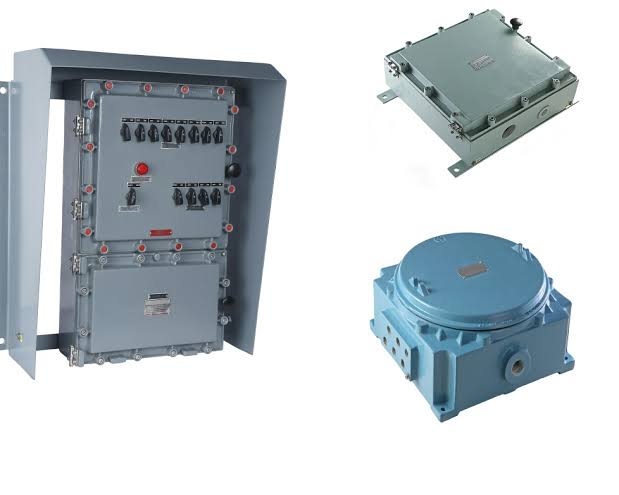
 flame proof panel box
Walk through any oil refinery, chemical plant, or offshore platform in the US, and you’ll find one thing quietly doing a lot of heavy lifting, power distribution equipment rated to survive an environment that would ignite in a heartbeat if the wrong spark got loose.
At FCG Flameproof Control Gears, we’ve spent years building flame proof panel box solutions for exactly these environments, and one thing engineers and procurement teams tell us again and again is this. Getting the panel box right isn’t a checkbox exercise. It’s often the difference between a safe operation and a very expensive incident report.
This blog breaks down what actually matters when choosing a flame proof panel box for hazardous area applications across the US.
Why a Flame Proof Panel Box Isn’t Just Another Enclosure
A flame proof panel box is built around one core idea, Ex d protection, meaning it contains any internal explosion so it never reaches the surrounding atmosphere. In facilities working with flammable gases, vapors, or combustible dust, that containment isn’t a nice-to-have. It’s the entire point.
- Standard enclosures aren’t designed to contain an internal ignition
- A flame proof panel box is engineered specifically to prevent that ignition from spreading outward
- The difference matters most in Zone 1, Zone 2, Zone 21, and Zone 22 classified areas
What to Look For in a Flame Proof Panel Box
Explosionproof (Ex d) protection. The core function. It contains internal explosions so they never reach the hazardous atmosphere outside the enclosure.
Customizable outgoing combinations. Facilities rarely have identical power needs, so panel boxes built to support ratings from 16A to 125A give real flexibility across applications.
Enclosure material. This affects durability, corrosion resistance, and where the box can actually be installed long term.
| Material | Best Suited For |
| Aluminium Alloy LM6 | Lightweight applications with strong corrosion resistance |
| SS 304 | General industrial environments with moderate exposure |
| SS 316 | Marine, offshore, and highly corrosive chemical environments |
| Cast Iron | Heavy-duty applications needing maximum mechanical strength |
High IP rating. Protection against dust, moisture, and environmental contaminants, especially important for outdoor or offshore installations.
Zone and gas group compatibility. Not every panel box works across every classification. Confirming Zone 1, Zone 2, Zone 21, or Zone 22 compatibility, along with the correct gas group (IIA, IIB, IIC), is a non-negotiable step.
Where Flame Proof Panel Boxes Are Actually Used
- Oil and gas facilities, for safe power distribution across flammable zones
- Chemical and petrochemical plants, where corrosive environments demand durable materials
- Mining operations, requiring rugged, impact-resistant enclosures
- Pharmaceutical and cleanroom facilities, needing secure, contamination-resistant power management
- Marine and offshore platforms, where corrosion resistance is essential for long-term reliability
A Quick Way to Think Through Your Selection
Start here → What’s your hazardous area classification?
- Zone 1 or Zone 21 (higher risk, continuous or frequent gas/dust presence) → Prioritize certified Ex d protection with robust enclosure material
- Zone 2 or Zone 22 (lower risk, occasional presence) → Still requires certification, with some flexibility in enclosure choice
Next → What’s your operating environment?
- Offshore or coastal → SS 316 for corrosion resistance
- General industrial → SS 304 or Aluminium Alloy LM6
- Heavy mechanical stress → Cast Iron
Result → A panel box matched to your actual site conditions, not a generic default
Why US Facilities Should Care About Customization
A lot of standard flame proof panel boxes on the market are built around fixed configurations that don’t quite match real operational needs. That mismatch usually shows up later, during expansion, retrofits, or when a facility’s power distribution needs simply outgrow a rigid setup.
- Single or multiple plug configurations built around actual site layout
- Rating combinations that match specific equipment loads, not rounded-up estimates
- Enclosure material selected for the facility’s real environmental exposure, not a one-size-fits-all default
Why Fcg Builds Flame Proof Panel Boxes This Way
We didn’t want to offer a narrow, fixed catalog of panel boxes and call it done. Facilities across oil and gas, chemical processing, mining, and offshore operations all have genuinely different demands, and a rigid product line doesn’t serve any of them particularly well.
- Explosionproof protection compliant with international safety standards
- Flexible outgoing combinations from 16A to 125A
- Multiple enclosure material options for different environmental conditions
- Designed to eliminate arcing and sparking during connection and disconnection
The Bottom Line
A flame proof panel box isn’t a piece of equipment you want to get wrong. Between hazardous area classifications, gas groups, and environmental exposure, getting the specification right the first time protects both people and operations.
Ready to Discuss Your Requirements?
FCG Flameproof Control Gears builds customized flame proof panel boxes for hazardous area applications, tailored to your facility’s classification, environment, and power distribution needs.
Get in touch to discuss your specific requirements.
FAQs
A flame proof panel box is specifically engineered to contain internal explosions, preventing ignition from reaching the surrounding hazardous atmosphere, unlike standard enclosures.
FCG’s flame proof panel boxes are designed for Zone 1, Zone 2, Zone 21, and Zone 22 areas, across gas groups IIA, IIB, and IIC.
Yes, FCG offers customizable outgoing combinations ranging from 16A to 125A, along with single or multiple plug configurations.
SS 316 is typically the strongest choice for offshore and marine environments due to its superior corrosion resistance.
Yes, they’re built for safe power distribution in oil and gas, chemical, petrochemical, mining, and offshore applications.
Yes, all panel boxes are certified for hazardous area use, ensuring compliance with international safety standards.