


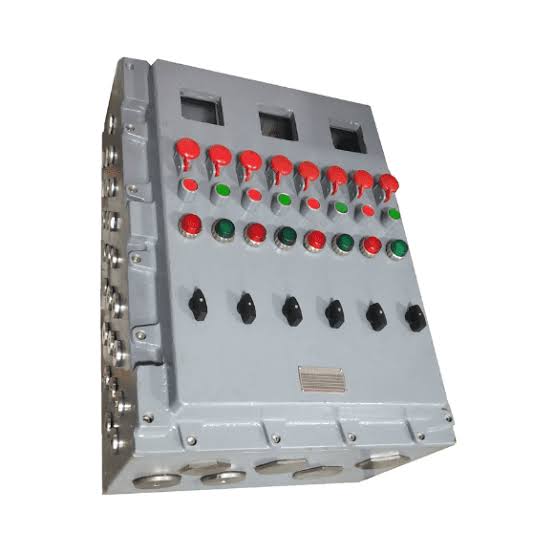
 flame proof electrical panel
A flameproof electrical panel houses switchgear and controls inside an Ex d enclosure. The enclosure contains any internal explosion. It stops the flame from igniting gas outside. These panels serve Zone 1 and Zone 2 areas with flammable gases or vapours. This guide is written for industries across Karnataka.
Control panels sit at the heart of every plant. They start motors, protect circuits and show status. In a hazardous area, they also carry a serious risk. Switching creates sparks and heat. Gas only needs one weak moment to ignite.
A flameproof panel is built for exactly that moment. Looking for a flameproof electrical panel in Karnataka that plants can rely on? This guide explains how it works and how to choose one.
What Is a Flameproof Electrical Panel?
It is a custom assembly of a certified Ex d enclosure and electrical components. The components may include starters, contactors, relays, push buttons and meters. The enclosure walls and joints are built to survive an internal explosion. Machined joints cool the escaping gases, so the flame never leaves the box.
In India, “flameproof” and “explosion proof” are used for the same protection method. The governing standard is IS/IEC 60079-1.
How Does It Differ From Other Protection Methods?
A flameproof panel is not the only option. Here’s a comparative overview of the three common methods.
| Method | Marking | Core idea | Typical use |
| Flameproof | Ex d | Contains the explosion | Compact field panels in Zone 1 |
| Increased safety | Ex e | Prevents sparks and excess heat | Terminal boxes with no arcing parts |
| Purged or pressurised | Ex p | Keeps flammable gas out using clean air | Large cabinets with electronics |
Ex d suits compact, field-mounted panels. On the other hand, purged methods suit larger cabinets that contain several electronic parts.
PESO’s guidance helps here. It allows flameproof equipment in Zone 1. It allows increased-safety and non-sparking types in Zone 2.
What Goes Inside a Flameproof Panel?
Some of the usual components inside a flameproof electric panel are—
- MCBs, MCCBs and isolators
- Starters and contactors
- Relays and timers
- Push buttons and indicating lamps
- Meters
Each part and its layout must match the certificate. So, do not just add up components later without the approval of the maker because such tweaks might render the certification as invalid.
Flameproof Electrical Panel Karnataka: Where Is It Used?
Karnataka’s industry stretches from Namma Bengaluru to the Karavali coast. Hazardous areas appear in many places like—
- Refining and petrochemical units around Mangaluru
- Port-side storage and chemical handling near the coast
- Pharma and speciality chemical units around Bengaluru
- Engineering and process units in KIADB industrial areas, including Peenya
- Power generation units in the Raichur belt
Panels there control pumps, mixers, fans and lighting circuits. They also power local instruments.
What Does Karnataka’s Climate Demand?
The Karavali coast brings humidity and heavy monsoon rain. Added to that, corrosion is a real threat there owing to the salty nature of the air. Stainless steel 316 is often the safer choice.
On the other hand, inland sites around Bengaluru are milder. Aluminium LM6 often serves them well. Check the ambient rating and corrosion needs before you order.
Why Does Heat Matter?
Components create heat inside a sealed box. That heat raises the enclosure’s surface temperature. The surface must stay below your gas’s ignition temperature. This is why the T-class matters.
More components mean more heat. High ambient temperatures increase the load. So, it’s better to ask the manufacturer to confirm the T-class with the actual component layout.
Choosing a Flameproof Electrical Panel- Best Practices
Step 1: Look for the area classification first. Check for the Zone and the gas or dust present there.
Step 2: Don’t forget to check the gas group and T-class.
Step 3: Note down your loads, including motors, lighting and instruments.
Step 4: Select the appropriate material. If possible, compare aluminium, stainless steel and cast iron before finalising.
Step 5: Select the mounting. Wall-mounted and floor-standing designs both exist. So choose according to your space, and specifications.
And last but not least, always ask for certifications and test reports, and check them before you order.
Which Material Is Best?
- Aluminium LM6: Lightweight. Corrosion resistant. Most importantly, it suits most industrial settings.
- Stainless steel 304, 316 or 316L: Strong. Corrosion resistant. SS 316 suits marine and harsh sites.
- Cast iron: Robust and cost-effective for heavy-duty use.
What About Cable Entries?
Cable entries are some of the most common weak points. Every entry needs a certified gland or stopping plug. So you need to—
- Match the gland to the cable type.
- Seal unused entries with certified plugs.
Ordinary fittings can break the flameproof protection. Buy glands and plugs from the same trusted source as the panel.
Which Documents Should You Ask For?
- The Ex certificate (ATEX, IECEx or PESO as applicable)
- Marking details, including gas group and T-class
- General arrangement and wiring drawings
- Routine test records
- The installation and maintenance manual
- A bill of materials with component details
Where Does PESO Approval Apply?
Under Rule 106 of the Petroleum Rules, 2002, certain equipment needs approval. This applies to electrical equipment in hazardous areas covered by those rules. The Chief Controller of Explosives grants it. Imported equipment is included.
Check this early in your project.
What Mistakes Should You Avoid?
- Buying on price instead of certification
- Adding components after the panel is certified
- Overlooking cable gland and entry details
- Ignoring heat build-up
- Treating a weatherproof panel as flameproof
How to Maintain It?
Follow the manufacturer’s manual and IEC 60079-17. Never open a live panel without a site permit.
Other than that, here are some mandatory things you need for proper care and maintenance of flameproof electrical panels in Karnataka—
- Inspect flame paths and gaskets
- Check glands and earth connections
- Keep flame paths free of paint
- Log every inspection
How FCG’s Solutions Fit In
Loads differ from site to site. A refinery unit near Mangaluru is not a pharma block in Bengaluru. That is why FCG builds customised flameproof control panels. They carry Ex d protection for Zones 1, 2, 21 and 22, along with covering gas groups like IIA, IIB and IIC.
FCG says panels can include starters, contactors, relays, push buttons and meters.
Material options match the climate points above. FCG lists SS 304, SS 316 and SS 316L for such corrosive sites. Aluminium LM6 and cast iron are also listed.
FCG also supplies customised distribution boards and switch racks. For plug-and-socket outlets, see its guide to the flame proof panel box. FCG lists ATEX, IECEx and IS compliance for these panels. So, always check the certificate and test records before you place your order.
Planning for a flameproof electrical panel in Karnataka that units can depend on? Share your zone, loads and site conditions with FCG’s team. Request a quote to begin.
Frequently Asked Questions
- What is a flameproof electrical panel?
It is a control or distribution panel inside an Ex d enclosure. The enclosure contains internal explosions and protects the surrounding atmosphere.
- Is a flameproof panel the same as an explosion proof panel?
Yes it is, but in India. Both terms describe Ex d protection under IS/IEC 60079-1.
- Can PLCs or drives go inside a flameproof panel?
Sometimes. It needs an engineering review. Heat output and certification limits both apply.
- Which zones need a flameproof panel in Karnataka?
The zone rules are the same across India. Flameproof panels are commonly used in Zone 1. They can also work in Zone 2 if the gas group and T-class align perfectly.
- What details should I send for a quote?
Send your Zone, gas group, T-class and loads. Add voltage, material preference, mounting type and cable entry needs.