


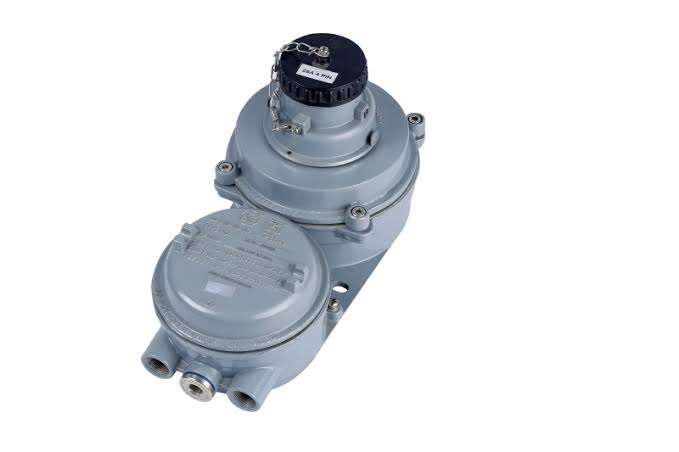
 explosion proof socket
Choosing electrical fittings for a hazardous industrial area isn’t like picking parts off a catalogue. One wrong decision, and you’ve got a compliance failure sitting inside your plant, or worse, a genuine safety hazard.
That’s the reality every plant engineer, EHS officer, and procurement team faces when sourcing an explosion proof socket for a Zone 1 or Zone 2 classified area.
At FCG Flameproof Control Gears (India) Pvt Ltd, this is a conversation we have almost daily with clients across the chemical, pharma, and oil & gas sectors.
People often assume “flameproof” is a single standard fits-all category. It isn’t. Material, gas group rating, IP rating, and certification all change depending on where and how the unit will be installed.
This guide walks you through everything you need to know before you buy your next socket.
What Exactly Is an Explosion Proof Socket?
An explosion proof socket isn’t just a tougher-looking plug point. It’s a precision-engineered enclosure built to contain an internal spark or arc so it never reaches the flammable gases, vapors, or dust surrounding it outside the unit.
If an electrical fault does spark inside the socket, the rugged housing, made from materials like Aluminium Alloy LM6, Stainless Steel SS 304/316, or Glass Reinforced Polyester (GRP), absorbs and contains that energy, cooling the escaping gases below their ignition point before they ever reach the outside atmosphere.
This is what engineers call Ex d protection, and it’s the backbone of safety in Zone 1, Zone 2, Zone 21, and Zone 22 hazardous areas. Simply put, if your facility handles flammable liquids, gases, or combustible dust, a standard socket is a ticking time bomb. An explosion proof socket is the non-negotiable alternative.
Understanding Hazardous Zones Before You Buy
Before selecting any unit, you need to know which zone your installation falls under. Here’s a quick breakdown:
| Zone Classification | What It Means | Typical Industry Example |
| Zone 1 | Explosive gas atmosphere likely to occur during normal operation | Refinery processing units, chemical reactors |
| Zone 2 | Explosive gas atmosphere unlikely, and only for short periods | Storage areas, peripheral plant zones |
| Zone 21 | Combustible dust likely to occur during normal operation | Pharma powder handling, grain processing |
| Zone 22 | Combustible dust unlikely, occurs only occasionally | Dust collection peripheries, packaging areas |
Once you know your zone, picking the right socket becomes a lot more straightforward, you’re no longer guessing, you’re matching a spec.
Material Selection: It’s Not One-Size-Fits-All
This is where a lot of buyers go wrong. They assume any flameproof-rated housing works everywhere. In reality, your site’s environment, humidity, chemical exposure, coastal air, temperature swings, should drive material choice just as much as the zone rating does.
| Material | Best Suited For | Key Advantage |
| Aluminium Alloy LM6 | General industrial plants, moderate exposure | Lightweight, cost-effective, good corrosion resistance |
| Stainless Steel SS 304 | Chemical plants with moderate corrosive exposure | Strong resistance to rust and everyday chemical contact |
| Stainless Steel SS 316 | Coastal, offshore, or highly corrosive environments | Superior resistance to chlorides and harsh chemicals |
| GRP (Glass Reinforced Polyester) | Non-conductive requirement zones, harsh weather | Impact-resistant, immune to rust entirely |
If your plant sits near the coast or handles aggressive chemical vapors, don’t cut corners on material, an explosion proof socket built from the wrong alloy will corrode faster than you’d expect, and a compromised enclosure defeats the entire purpose of flameproof protection.
Why India’s Industrial Belt Can’t Function Without This
India’s industrial geography makes this a live issue in dozens of clusters.
- In Vadodara, Gujarat’s petrochemical and API manufacturing base, plants running continuous solvent-heavy processes need SS-grade sockets that can handle years of chemical exposure without degrading.
- In Nagpur, a growing hub for chemical intermediates and API production in Maharashtra, newer facilities are increasingly specifying GRP enclosures for their non-conductive properties in dust-prone sections.
- Down in Tarapur, Thane’s dense industrial belt of small and mid-sized chemical units, cost-conscious but compliance-driven buyers often lean toward Aluminium Alloy LM6 for its balance of price and performance.
- Meanwhile, Indore in Madhya Pradesh, a major pharmaceutical and chemical manufacturing center, has seen rising demand for certified flameproof fittings as more formulation units scale up production lines.
- On the southern industrial corridor, Cuddalore and Ranipet in Tamil Nadu, both known for concentrated chemical manufacturing clusters, regularly deal with humid, corrosive coastal conditions that make SS 316 the practical default rather than the premium option.
- And up in Uttarakhand, Kashipur, an emerging center for chemical plants and manufacturing, is seeing new installations where engineers are specifying units strictly against IECEx and ATEX documentation rather than accepting vague flameproof claims.
Across every one of these clusters, the underlying decision-making process is identical, match the zone, match the material, verify the certificate.
Certification Checklist Before You Finalize Your Order
A genuine explosion proof socket should come with clear, verifiable documentation. Don’t take a supplier’s word for it, ask for:
- ATEX certification (for European compliance benchmarks)
- IECEx certification (globally recognized testing standard)
- IS certification (mandatory for Indian regulatory compliance)
- Test certificates specific to the gas group (IIA/IIB/IIC) relevant to your process
- Ingress protection (IP) rating suited to your environment
If a supplier can’t produce these on request, that’s your answer right there.
How FCG Approaches This Differently
At FCG Flameproof Control Gears (India) Pvt Ltd, we don’t sell a single generic unit and call it done.
Every explosion proof socket we manufacture is built against the specific zone, gas group, and material requirement our clients bring to us, because we’ve seen firsthand what happens when a plant installs the wrong-grade equipment and has to redo the entire installation mid-project.
Our range spans Aluminium Alloy LM6, SS 304, SS 316, and GRP construction, all certified to ATEX, IECEx, and IS standards, so you’re never left second-guessing your compliance paperwork during an audit.
Let’s Get Your Site Compliant, the Right Way
If you’re currently sourcing flameproof electricals for a new installation, or auditing an existing one that’s due for an upgrade, talk to our team before you finalize anything. We’ll help you match the right specification to your actual site conditions.
FAQS
It depends on your hazardous area classification (Zone 1, 2, 21, or 22) and the specific gas group (IIA, IIB, or IIC) present at your site. A hazardous area classification study, usually conducted during plant design or safety audits, will tell you exactly which rating you need.
Yes, but material selection matters a lot here. For outdoor or coastal installations, SS 316 or GRP enclosures generally outperform standard aluminium alloy units because of their superior resistance to weather and corrosion.
IP rating measures protection against dust and water ingress, while Ex d rating specifically measures the enclosure’s ability to contain an internal explosion. A quality unit needs to satisfy both, not just one.
Most industrial safety guidelines recommend periodic visual and functional inspections at least annually, with more frequent checks in high-humidity or heavy-chemical-exposure environments. Always follow your site’s specific EHS maintenance schedule.
For Indian installations, IS certification is mandatory. However, if your facility works with multinational partners, exports, or follows global EPC standards, ATEX and IECEx certification adds an extra layer of recognized compliance that’s often required during international audits.