


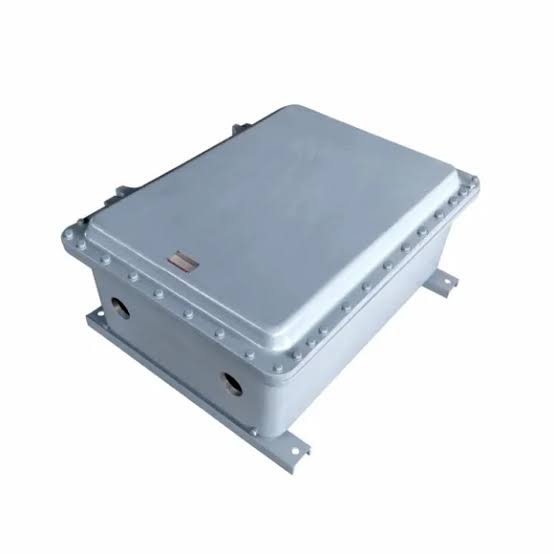
 Flameproof Junction Box
Walk into any solvent handling area, reactor bay, or bulk drug storage unit, and you’ll notice the same thing our engineers have noticed on hundreds of site visits over the years: nobody thinks about the junction box until something goes wrong with it.
That’s the nature of good electrical safety equipment, when it’s doing its job, it’s invisible. A flameproof junction box is exactly that kind of equipment.
It sits quietly in a Zone 1 or Zone 2 area, and if a fault ever sparks inside it, its entire job is to contain that spark within a cast iron shell so it never reaches the flammable atmosphere outside.
At FCG Flameproof Control Gears (India) Pvt Ltd, we’ve spent years manufacturing and customizing these enclosures for plants that simply cannot afford an incident, not on paper, not in practice.
This guide is written from that vantage point: what a flameproof junction box actually does, where in India it matters most, how to match specs to real applications, and the questions we get asked on almost every enquiry call.
What Makes a Junction Box “Flameproof”?
A regular junction box keeps dust and moisture off your wiring. A flameproof junction box does something far more serious.
It’s certified under Ex d protection to physically contain an internal explosion, cool the escaping gases as they pass through precision-machined flame paths, and stop that heat from ever igniting the atmosphere outside the enclosure.
In Zone 1, Zone 2, Zone 21, and Zone 22 areas, particularly where gas groups IIA, IIB, or IIC are present, this isn’t a nice-to-have. It’s the baseline.
Cast iron gets chosen for this job because it survives what plants actually throw at it: repeated mechanical impact, corrosive splashes, years of thermal cycling.
We’ve replaced enough cheaper alternatives on retrofit jobs to know that durability here isn’t a marketing line, it’s what keeps an audit clean five years down the road.
Where India Actually Needs a Flameproof Junction Box
India’s chemical and pharma manufacturing base has expanded fast, and hazardous-area electrical protection has had to keep pace with it.
Based on the enquiries we handle, these ten clusters are where a properly rated flameproof junction box comes up again and again as a compliance essential, not an option.
| Region/Cluster | State | Why It Is Important |
| Vapi | Gujarat | Dense concentration of chemical and pharma units, high fire-risk zones |
| Ankleshwar | Gujarat | Chemical intermediates manufacturing with volatile solvents |
| Ahmedabad & Vadodara | Gujarat | API production and formulation hubs |
| Hyderabad | Telangana | Known as the Bulk Drug Capital of India, 800+ companies |
| Mumbai & Navi Mumbai | Maharashtra | Pharma HQs, R&D, and process manufacturing |
| Tarapur (Thane) | Maharashtra | Mixed-scale chemical industries requiring Ex-rated equipment |
| Baddi & Nalagarh | Himachal Pradesh | One of Asia’s largest pharma manufacturing belts |
| Pithampur (Dhar) | Madhya Pradesh | Dedicated pharma SEZ, high-density formulation units |
| Indore | Madhya Pradesh | Pharmaceutical and allied chemical infrastructure |
| Cuddalore & Ranipet | Tamil Nadu | Specialized chemical manufacturing clusters |
Every one of these locations shares the same underlying reality: flammable vapors, combustible dust, or both, present in daily operations. That’s the exact environment a flameproof junction box is engineered for.
Matching the Box to the Application
Not every hazardous area needs identical specification, and this is where plants most often get it wrong, either over-speccing and burning budget, or under-speccing and creating real risk. Here’s the reference our sales engineers actually walk clients through.
| Application Area | Typical Zone | Recommended Feature |
| Solvent handling/distillation units | Zone 1 | Ex d IIB/IIC rated flameproof junction box |
| Bulk drug intermediate storage | Zone 1 / 21 | High IP-66 rated cast iron enclosure |
| Power distribution near reactors | Zone 2 | Customized size up to 1000×750 mm |
| Outdoor pump houses, refineries | Zone 1 | Wall or floor-mounted, corrosion-resistant finish |
| Multi-cable termination panels | Zone 1 / 2 | Large-format flameproof junction box with modular terminals |
Why Cast Iron Still Wins
Newer materials look attractive on a datasheet, but in real plant conditions, chemical splashes, forklift and trolley impact, years of thermal cycling, cast iron construction simply outlasts them.
A well-made flameproof junction box in cast iron isn’t something you replace every couple of years; it’s something you install once and inspect for decades.
This matters even more in high-traffic sites like Pithampur, Ankleshwar, or Tarapur, where multiple shifts and constant equipment movement put real physical stress on enclosures.
A box that cracks or corrodes early isn’t just a maintenance line item, it’s a compliance gap waiting to surface at the next audit.
Customization Is Where It Gets Practical
No two plants wire their panels the same way, which is why we don’t just push off-the-shelf sizes.
Our engineers work directly with client process and electrical teams to configure gland plate layouts, terminal counts, and enclosure dimensions, up to 1000×750 mm, so the flameproof junction box fits the installation, instead of forcing the installation to fit the box.
This is especially relevant on retrofit projects, where existing conduit runs and panel spacing were never designed around modern Ex-rated equipment. A custom flameproof junction box solves that without tearing out and rewiring an entire panel.
Importance of Compliance
Worth saying plainly: a flameproof junction box is only as good as its certification and its installation.
Ex d protection means nothing if flame path tolerances are compromised during a poor manufacturing run, or if gland fittings are mismatched on site.
When sourcing for a Zone 1 facility in Hyderabad, Baddi, or Indore, ask for test certificates, IP ratings, and gas group compatibility before the box goes on the wall, not after.
Conclusion
Hazardous-area electrical safety isn’t a checkbox exercise, it’s the difference between a plant that runs quietly for thirty years and one that makes the news for the wrong reasons.
Whether you’re commissioning a new formulation unit in Pithampur or upgrading legacy panels in Ankleshwar, a properly engineered flameproof junction box is one of the cheapest insurance policies you’ll ever buy for your facility.
If you’re specifying for a new project or retrofitting an existing plant, our team at FCG Flameproof Control Gears (India) Pvt Ltd can review your zone classification and recommend the right configuration, customized, certified, and built to last.
Schedule a call for more insights.
FAQS
A weatherproof box only protects against dust, rain, and general environmental exposure. A flameproof junction box is rated to contain an internal explosion and stop it from igniting flammable gas or dust outside the enclosure. They’re built for entirely different risk categories, and one can’t substitute for the other in a certified hazardous area.
It depends on the specific solvents and vapors present at your site, but most chemical intermediate and bulk drug facilities in clusters like Ankleshwar, Vapi, or Hyderabad require IIA or IIB ratings at minimum, with IIC needed for more volatile hydrogen-adjacent processes. A site-specific hazardous area classification study is the right starting point before ordering.
Yes. FCG regularly configures gland plate layouts, terminal counts, and enclosure dimensions up to 1000×750 mm to match existing conduit runs and panel spacing, which is especially useful for retrofit projects where standard sizes won’t fit.
With correct installation and periodic inspection, a well-manufactured cast iron enclosure can reliably serve for 15-20+ years even in corrosive or high-impact environments, far outlasting lighter alternative materials.
Always request the Ex d test certificate, IP rating documentation, and confirmation of gas group and temperature class compatibility for your specific zone. Skipping this step is one of the most common (and costly) mistakes plants make during procurement.