


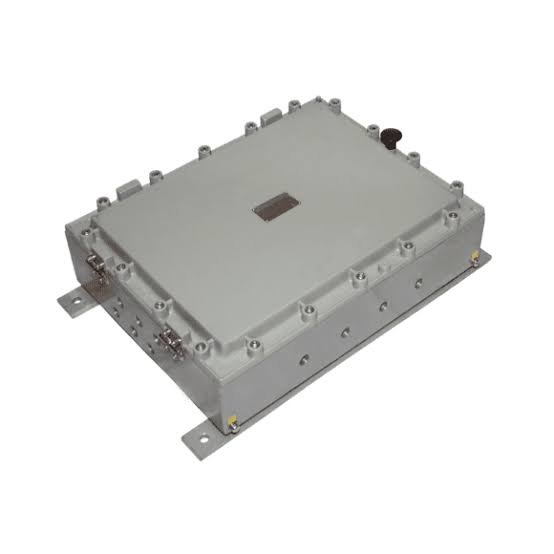
 explosion proof enclosure
Ask any plant safety head what keeps them up at night, and chances are it’s not production targets, it’s the electrical panel sitting three feet away from a solvent storage tank. That single point of failure is exactly what an explosion proof enclosure is built to eliminate.
At FCG Flameproof Control Gears (India) Pvt Ltd, we work with plant engineers and EHS teams across the country who are constantly balancing two things, keeping operations running and keeping people alive. A enclosure sits right at the intersection of both.
This blog walks through what it actually does, why it’s non-negotiable in hazardous zones, and how to choose the right one for your facility.
What Is a Enclosure?
An explosion proof enclosure is a certified housing built to contain any internal electrical spark or explosion so it never escapes into the surrounding atmosphere.
Think of it less as a protective cover and more as a controlled containment chamber, if something ignites inside, the enclosure’s precisely engineered flamepaths cool the escaping gases below ignition temperature before they can reach the flammable vapors or dust outside.
This is the working principle behind Ex d protection, and it’s what separates a genuine enclosure from a regular dust-and-moisture-resistant panel. The two look similar from the outside. They are nowhere close in what they actually do.
Top Usage of Enclosures in Chemical and Pharma Zones
Any facility working with solvents like acetone, toluene, methanol, or IPA, or handling flammable gases and combustible dust, is operating in a classified hazardous zone whether the paperwork says so explicitly or not. In these environments, a standard electrical panel is a genuine ignition risk, not a hypothetical one.
A properly certified explosion proof enclosure does three things well: it contains internal ignition, it blocks corrosive vapors and moisture from getting in, and it keeps performing reliably through years of heat, vibration, and chemical exposure. Skip any one of these, and you’re not really protected, you just have a box that looks reassuring.
Explosion Proof Enclosure vs Standard Electrical Enclosure
People often assume any rugged metal box qualifies as “flameproof.” It doesn’t. Here’s the real difference:
| Feature | Standard Electrical Enclosure | Flameproof Enclosure |
| Purpose | Protects equipment from dust/moisture | Contains internal explosion and prevents ignition spread |
| Certification | Basic IP rating only | ATEX, IECEx, PESO/IS certified |
| Construction | General-purpose sheet metal | Precision-machined flamepaths, pressure-tested housing |
| Suitable Zones | Non-hazardous or low-risk areas | Zone 1, Zone 2, Zone 21, Zone 22 |
| Gas Group Rating | Not applicable | Rated for IIA, IIB, or IIC gas groups |
| Risk in Chemical Plants | High, can ignite surrounding vapors | Designed specifically to prevent ignition |
If your site has any classified hazardous area, this table alone should answer whether your existing panels are actually compliant or just look the part.
Material Matters More Than Most Buyers Realize
The material of an enclosure determines how long it survives real plant conditions, not just whether it passes a certification test on day one.
| Material | Where It Performs Best | Why It Works |
| Stainless Steel SS 316 | Coastal plants, high-corrosion chemical zones | Superior resistance to chlorides and aggressive fumes |
| Stainless Steel SS 304 | General chemical processing areas | Solid corrosion resistance for everyday exposure |
| Aluminium LM6 | Standard industrial plants, moderate exposure | Lightweight, cost-effective, decent corrosion resistance |
| Cast Iron | Heavy mechanical zones, high-impact areas | Excellent mechanical strength and impact resistance |
A plant near the coast that installs Aluminium LM6 because it’s cheaper is setting itself up for premature corrosion, and a corroded enclosure is a compromised one, no matter what the certificate says.
Importance of Enclosures Across India
India’s hazardous-zone footprint is massive, and it’s growing every year across chemical, pharma, and industrial clusters.
- In Ankleshwar, Gujarat’s chemical intermediate belt, plants running continuous solvent processes rely heavily on certified enclosures to keep reactor and blending sections compliant.
- Just down the road in Vapi, another dense chemical and pharma town in South Gujarat, safety audits routinely flag non-certified panels in solvent handling rooms.
- In Hyderabad, drug companies depend on flameproof protection at nearly every distribution point.
- Pune, known for its biologics and biotech research facilities, has increasingly strict requirements around cleanroom-adjacent hazardous zones where an explosion proof enclosure has to satisfy both contamination control and explosion safety.
- Up in Himachal Pradesh, Baddi, one of Asia’s largest pharmaceutical manufacturing hubs, runs thousands of formulation lines where flameproof compliance isn’t a suggestion, it’s mandatory under Indian safety regulations.
- And in Maharashtra, Nagpur, a growing center for API and chemical intermediate production, is another region where we’re seeing steady uptake of certified flameproof solutions as facilities modernize their electrical infrastructure.
Where Enclosures Are Installed
Within a typical plant, the need isn’t limited to one section. Reactor and distillation zones generate flammable vapors constantly. Solvent storage rooms and blending areas hold concentrated chemical fumes.
Transfer pump stations, loading terminals, and packaging lines all involve frequent handling of volatile material.
Even QC labs and effluent treatment plants deal with hazardous gases during testing and waste processing.
Every one of these areas needs a properly rated enclosure, not a generic industrial panel repurposed for the job.
What to Check Before You Buy
- Certification — ATEX, IECEx, and PESO/IS approval, with documentation you can actually verify
- Gas group rating — matched to your specific process (IIA, IIB, or IIC)
- Material fit — chosen against your site’s humidity, chemical exposure, and coastal conditions
- IP rating — IP66/IP67 for genuine resistance against dust and corrosive liquids
- Custom configuration support — for control panels, PLC systems, and instrumentation specific to your process
How FCG Builds Its Enclosure Range
At FCG Flameproof Control Gears (India) Pvt Ltd, every enclosure we manufacture is built against the actual zone classification and gas group our clients bring to us, not a one-size-fits-all template.
We offer SS304, SS316, Aluminium LM6, and Cast Iron construction, all certified to ATEX, IECEx, and PESO standards, with precision-machined flamepaths that go through rigorous testing before they ever reach your site.
Our team has seen what happens when facilities install the wrong enclosure and have to retrofit mid-project, it’s a conversation we’d rather have before installation than after an audit failure.
Get Your Existing Installations Reviewed
If it’s been a while since your explosion proof enclosure units were properly inspected, or you’re not sure your current maintenance schedule actually meets IS/IEC standards, our team can help you figure out where you stand.
FAQS
Its main function is to contain any internal electrical spark or explosion so it never reaches the flammable gases, vapors, or dust present outside the enclosure, preventing the ignition from spreading into the hazardous zone.
A regular junction box only protects internal wiring from dust and moisture. An enclosure is specifically engineered with precision flamepaths to contain internal explosions, something a standard junction box was never designed to do.
Always verify ATEX certification for European compliance benchmarks, IECEx for globally recognized testing standards, and PESO/IS certification, which is mandatory for installations within India.
Stainless Steel SS 316 is generally the strongest choice for coastal or highly corrosive environments due to its superior resistance to chlorides and aggressive chemical exposure.
Any area classified under Zone 1, Zone 2, Zone 21, or Zone 22 needs certified flameproof protection, which typically includes reactor zones, solvent storage rooms, transfer stations, packaging lines, and even QC labs and effluent treatment areas where hazardous gases or dust are present.