


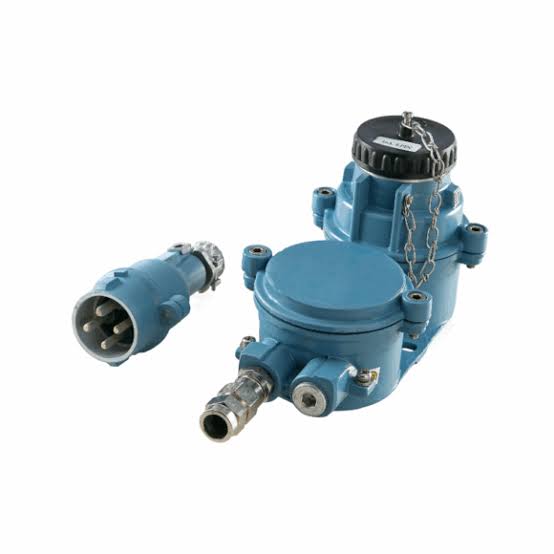
 atex approved
Ask any electrical engineer working a site in Jubail or Dammam what worries them most, and cable entry points often come up before anything else. It’s a small connection point, but it’s exactly where things go wrong if the wrong gland is fitted.
That’s why the question we hear most from Saudi buyers isn’t about price, it’s whether a gland is genuinely ATEX approved. ATEX (from the French ATmosphères EXplosibles) is the EU directive covering equipment designed for explosive atmospheres, and it’s become the practical shorthand engineers use across the Gulf to talk about real protection.
At FCG Flameproof Control Gears (India) Pvt Ltd, we manufacture flameproof cable glands specifically for environments like this.
Significance of ATEX in Saudi Arabia’s Oil & Gas Sector
In Saudi Arabia flammable gases are a constant, not an exception. The Kingdom runs on hydrocarbons, and its refineries, offshore platforms, and processing terminals operate in atmospheres where usage of flammable gases are vital.
Facilities tied to Saudi Aramco and the EPC (Engineering, Procurement, and Construction) contractors supporting them expect suppliers to prove genuine ATEX approved status, not just claim it on a spec sheet.
That expectation exists because a single ignition point can undo years of otherwise solid engineering. Nobody wants to be the reason that happened.
What a Flameproof Gland Actually Does
A flameproof gland creates a flame-tight seal between a cable and its enclosure. If an internal explosion occurs, the gland stops flame or hot gas from escaping through the cable entry point.
That containment function is the entire reason certification exists. Without it, even a well-designed enclosure has an exposed weak point.
Genuinely ATEX approved glands are tested specifically for this, not assumed to work because the housing around them looks solid.
Materials That Hold Up in Saudi Conditions
Saudi Arabia’s climate is brutal on equipment, extreme heat, sand exposure, and in coastal areas, corrosive humidity too. Material choice isn’t a minor spec decision here.
| Material | Best Suited For | Key Advantage |
| Brass Nickel-Plated | General onshore refinery and processing use | Cost-effective, solid corrosion resistance |
| Stainless Steel 304 | Chemical plants, inland processing zones | Strong resistance to industrial corrosion |
| Stainless Steel 316 | Coastal terminals, offshore platforms | Superior resistance to salt-air corrosion |
Getting this wrong doesn’t just mean faster wear. It can quietly undermine the seal integrity the gland was certified for in the first place.
Gas Groups and Zone Classifications: ATEX Approved Insights
Not every hazardous area in Saudi Arabia carries the same risk profile, and gland selection should reflect that directly.
Gas Groups IIA, IIB, and IIC each represent different ignition sensitivities, and choosing the wrong classification can leave a site under-protected.
Not sure which classification applies to your installation? Our team can review your site’s hazard assessment and recommend the right gland spec.
Certified vs. Uncertified: The Comparison
This is the table we walk through with almost every buyer, because uncertified components can look nearly identical on the surface.
| Factor | ATEX Approved Gland | Uncertified “Generic” Gland |
| Flame-tight sealing | Tested and verified | Not independently tested |
| Gas Group coverage | IIA, IIB, IIC classified | Often unspecified |
| Corrosion resistance | Matched to material grade | Inconsistent, often unclear |
| Compliance documentation | Full test reports available | Frequently missing |
| Insurance and audit acceptance | Generally accepted | Often flagged or rejected |
The cost gap between these two is usually small. The gap in actual protection isn’t.
Top Sectors Using ATEX Materials in Saudi Facilities
Offshore platforms, refineries, storage terminals, and control panels across the Kingdom all depend on secure cable entries to stay protected.
A gland that isn’t genuinely rated for its zone leaves the entire enclosure vulnerable, no matter how solid everything else looks.
We’ve seen sites discover this the hard way, usually during an audit, which is exactly the moment nobody wants surprises.
Top Advice to Saudi-Based Buyers
Ask for test reports before discussing price. It’s the fastest way to tell a genuine manufacturer from a reseller repackaging unverified parts.
A supplier confident in their ATEX approved status will hand over sealing test data and material certification without hesitation.
Every gland we manufacture goes through rigorous testing for mechanical durability, sealing performance, and explosion containment before it ships.
Built for Genuine Installations: Tech Specs
Cable types and diameters vary across power, control, and instrumentation applications, so we manufacture our glands in multiple configurations.
Each one maintains consistent pressure and secure grip around the cable, even under vibration and operational stress common on Saudi industrial sites.
That precision sealing reduces loosening, leakage, and unplanned maintenance, which matters when downtime is expensive.
Why Saudi Facilities Choose FCG
We manufacture in-house, giving us direct control over quality rather than relying on third-party assembly.
Every gland we produce is genuinely ATEX approved, alongside IECEx and IS/IEC compliance, so the documentation matches the engineering behind it.
Are you looking to equip your next Saudi project with certified, field-proven glands? Call us, we’ll help match the right gland to your exact zone and gas group requirements.
FAQS
ATEX is formally an EU directive, but across Saudi Arabia and the wider Gulf it functions as the practical benchmark for hazardous-area equipment. Most Saudi Aramco-linked EPC contractors specify genuinely ATEX approved components alongside IECEx and IS/IEC references, since it offers independently verified protection rather than a supplier’s self-declaration.
The terms are largely used interchangeably in the industry. Both describe a fitting designed to contain ignition within the enclosure and prevent it from reaching the surrounding hazardous atmosphere.
Stainless Steel 316 is generally the better choice for offshore or coastal sites, since it resists salt-air corrosion far better than brass or standard stainless grades used inland.
Most facilities include gland inspection in their regular hazardous-area maintenance cycle, checking seal integrity, corrosion, and cable grip to confirm nothing has compromised the flameproof rating over time.
Ask for sealing performance test certificates, Gas Group classification (IIA/IIB/IIC), and material specification sheets. A supplier that hesitates to provide these is worth reconsidering, regardless of price.