


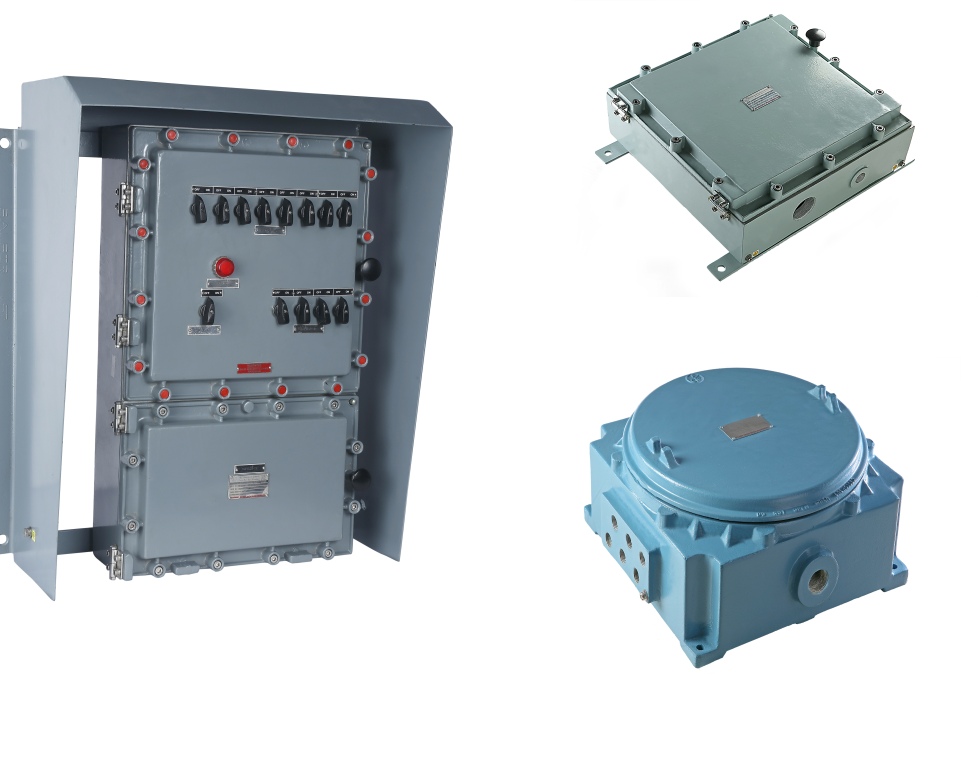
 atex certified
Ask any maintenance engineer in Ahmadi what keeps them up at night, and somewhere in the answer you’ll hear a version of this: “I need to know the enclosure protecting that junction box will actually do its job if something goes wrong.”
That’s really what ATEX certified means in practice. ATEX comes from the French phrase ATmosphères EXplosibles, and it’s the EU directive that governs equipment built for explosive atmospheres. But out here in the Gulf, it’s become something closer to a shared language, a way for engineers, buyers, and auditors to talk about risk without having to reinvent the conversation every time.
We’ve been building flameproof enclosures at FCG Flameproof Control Gears (India) Pvt Ltd for long enough to know that certification isn’t a formality people tick off a checklist.
Why ATEX Certification Is Vital in Kuwait
Kuwait doesn’t have the luxury of treating hazardous-area equipment as an afterthought. The country’s entire industrial identity is built on oil and gas, which means flammable atmospheres aren’t an edge case, they’re Tuesday.
Facilities tied to KOC (Kuwait Oil Company) and KNPC (Kuwait National Petroleum Company) work with EPC (Engineering, Procurement, and Construction) contractors who’ve seen enough near-misses to stop taking shortcuts.
When they ask whether an enclosure is genuinely ATEX certified, they’re not asking out of habit. They’re asking because they’ve had to explain equipment failures to people who don’t accept.
Importance of ” ATEX Certified”
Here’s something we tell every client who asks: a certificate is only as good as what’s behind it. Anyone can print a logo. Not everyone can back it with test data.
A genuinely certified enclosure has been through precision flame-path machining and gasket testing designed to contain an explosion inside the housing rather than let it escape. That’s the whole point of Ex d protection, containment, not prevention.
We build ours from Stainless Steel 304/316, Cast Iron, and Aluminium (LM6 grade), and honestly, the material choice matters more than most people expect going in.
Picking the Right Material for Kuwait’s Conditions
Coastal humidity, salt air, and relentless heat don’t treat every material the same way. We’ve watched sites choose the wrong grade and pay for it within a couple of years.
| Material | Best Suited For | Key Advantage |
| Stainless Steel 316 | Offshore, marine terminals, coastal refineries | Superior resistance to salt-air corrosion |
| Stainless Steel 304 | General chemical and processing plants | Strong corrosion resistance, more cost-effective |
| Cast Iron | Heavy-duty petrochemical zones | Rugged, high mechanical strength |
| Aluminium (LM6) | Onshore oil & gas, refineries | Lightweight, naturally corrosion-resistant |
Zone Classifications
Every hazardous area on a Kuwaiti site carries its own risk fingerprint. Zone 1, plus gas groups IIA, IIB, and IIC, each demand a different level of protection.
Get this wrong, and you either overpay for protection you didn’t need, or worse, install something that can’t actually handle the atmosphere it’s sitting in.
Genuinely unsure which classification applies to your site? Contact FCG for the respective guidance.
Comparing Certified vs. Uncertified Enclosures
| Factor | ATEX Certified Enclosure | Uncertified “Industrial” Enclosure |
| Flame path testing | Precision-machined, independently verified | Rarely tested or documented |
| Pressure integrity | Confirmed under controlled test conditions | Largely unknown |
| IP rating (Ingress Protection) | IP66/IP67 dust and water resistance | Often unspecified |
| Audit documentation | Full test reports on hand | Frequently missing entirely |
| Insurance acceptance | Generally accepted | Often flagged or rejected outright |
Top Significance of ATEX Certification in Kuwait
Refineries, petrochemical crackers, and marine terminals across Kuwait all rely on these enclosures to protect terminals, switches, MCBs (Miniature Circuit Breakers), PLCs (Programmable Logic Controllers), and instrumentation.
None of that equipment is doing its job if the housing around it isn’t rated for the zone it’s sitting in.
We’ve had conversations with facility managers who assumed their enclosures were compliant for years, until an audit said otherwise.
Our Honest Advice to Kuwait-Based Buyers
Ask for the test reports before you even discuss price. It sounds blunt, but it’s the fastest way to separate a real manufacturer from a reseller repackaging someone else’s parts.
A supplier that’s confident in their ATEX certified status won’t hesitate to hand over flame-path data and material certification.
Every enclosure we ship is 100% tested for flameproof integrity before it leaves our facility. We’d rather field tough questions during procurement than during an incident report.
Custom Configurations for Project-Specific Needs
Every site is a little different, which is why we don’t push a one-size-fits-all catalogue. Custom sizes, entry threads, mounting configurations, we build to what your project actually needs.
Every custom configuration still follows ATEX, IECEx (International Electrotechnical Commission System for Certification to Standards Relating to Equipment for Use in Explosive Atmospheres), PESO (Petroleum and Explosives Safety Organisation), and IS/IEC 60079 standards. Flexibility never comes at the expense of compliance.
Why Facilities in Kuwait Keep Coming Back to FCG
We design and manufacture in-house, which gives us control over quality that a reseller simply can’t offer.
We already supply refineries, EPCs, and OEMs (Original Equipment Manufacturers) across India and the wider Gulf, including projects in Kuwait’s industrial corridor.
And when a project timeline is tight, fast turnaround isn’t a nice-to-have, it’s often the difference between staying on schedule and not.
If your next project needs enclosures you won’t have to think twice about, that’s exactly what we build.
FCG Flameproof Control Gears (India) Pvt Ltd supplies genuinely certified flameproof and explosionproof enclosures to refineries, EPCs, and OEMs across Kuwait and the wider Gulf.
Book a call to get your custom enclosure.
FAQ
1. Is ATEX certification actually recognized in Kuwait, or only within the EU?
ATEX is formally an EU directive, but across Kuwait and the GCC (Gulf Cooperation Council) it functions as the practical benchmark everyone measures against. Most Kuwaiti EPC contractors ask for genuinely ATEX certified equipment alongside IECEx and IS/IEC 60079 references, simply because it’s independently verified rather than self-declared.
2. What’s actually different between Zone 1 and Zone 2 areas?
Zone 1 has flammable gas present during normal operation. Zone 2 only sees it occasionally, during a leak or malfunction, for example. That’s why Zone 1 equipment generally needs a higher level of built-in protection.
3. Can one enclosure material work everywhere on a Kuwaiti site?
Not really. Coastal and offshore installations need the extra corrosion resistance of SS (Stainless Steel) 316, while onshore refinery areas can often get away with lighter Aluminium without losing protection.
4. How do manufacturers actually test flameproof integrity?
It comes down to precision flame-path measurement and pressure testing under controlled conditions, confirming the enclosure can contain an internal explosion without letting flame or excess pressure escape.
5. What should I ask a supplier for before I place an enclosure order?
Flame-path test certificates, material specification sheets, and IP66/IP67 ingress ratings. If a supplier hesitates to share any of that, take it as your answer.